

Imagine binge-watching your favorite shows on a screen so big it feels like you’re in the front row of a concert. Connecting your iPhone to your Roku TV can turn that dream into reality. Whether it’s sharing family photos or streaming the latest blockbuster, the process is easier than you think—and way less complicated than assembling IKEA furniture.
Overview of Connecting iPhone to Roku TV
Connecting an iPhone to a Roku TV allows users to stream content seamlessly. This process typically involves a few straightforward steps. First, ensure both devices are connected to the same Wi-Fi network. A consistent network connection is crucial for successful streaming.
Next, access the Roku device’s settings. Select the “Screen Mirroring” option from the settings menu. This feature enables users to share the screen of their iPhone directly to the TV. After that, open the Control Center on the iPhone by swiping down from the top-right corner. Tapping the “Screen Mirroring” icon reveals available devices.
Once the Roku TV appears in the list, tap on it. The iPhone screen should then display on the TV. Should you encounter a prompt asking for a code, enter the code shown on your TV. The connection process should finalize quickly, allowing streaming without delay.
In addition to screen mirroring, users can utilize the Roku app. The app includes features to cast videos, music, and photos from the iPhone to the TV. Downloading the app from the App Store is the first step in this process. After installation, launch the app and select the desired content to cast.
Some advantages include enjoying videos at a larger display and accessing apps faster. Users will find it easier to navigate their favorite streaming services directly from their iPhone. Connecting these devices enhances the overall entertainment experience significantly.
Requirements for Connection
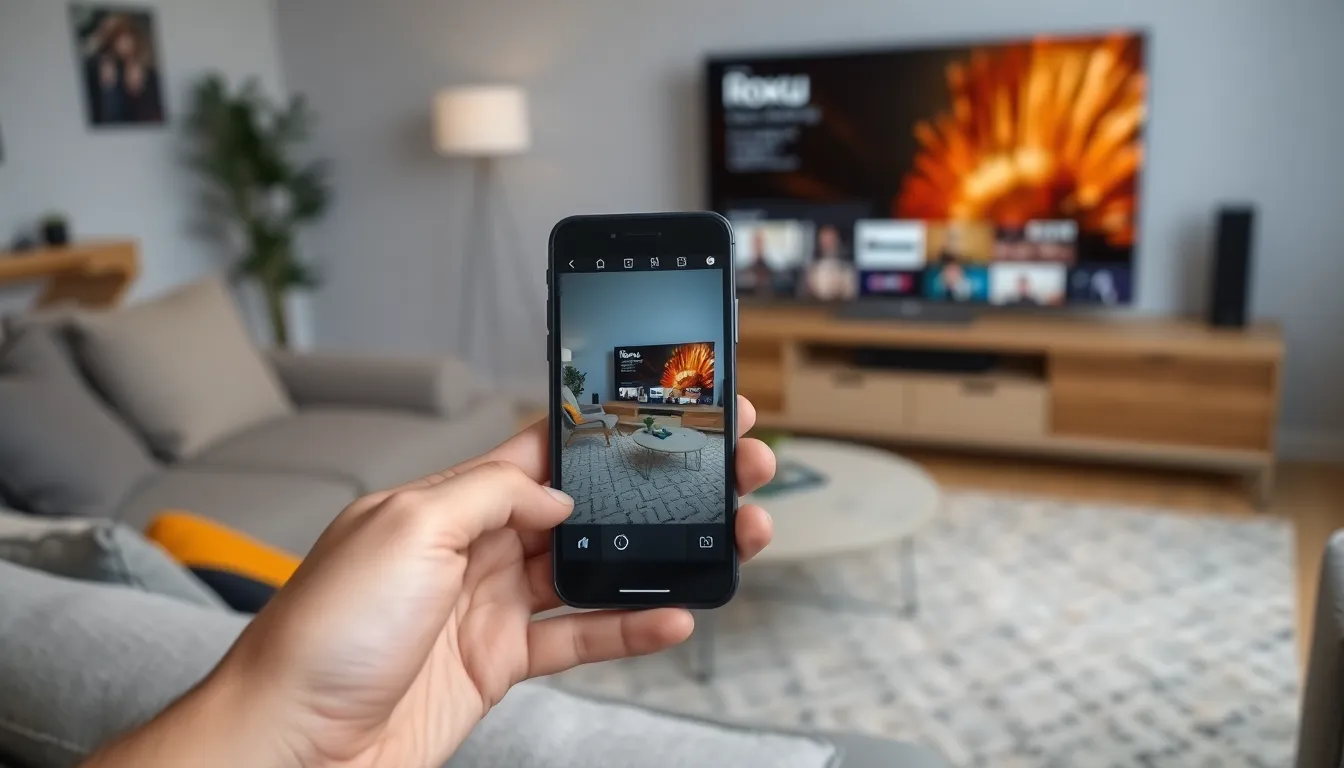
Connecting an iPhone to a Roku TV requires specific devices and settings to establish a successful link.
Supported iPhone Models
All recent iPhone models support screen mirroring features, but compatibility may vary. iPhone 6 and later models, including the iPhone 7, 8, X, 11, 12, 13, and 14, work well with Roku devices. Each of these models runs at least iOS 12, ensuring reliable screen mirroring capabilities. Users benefit from seamless integration when using modern devices. Older models may not support some functions, limiting the connection options.
Roku TV Compatibility
Roku TVs vary in their model features, but most support the screen mirroring function. Models released in 2014 and later commonly feature the necessary options to connect with iPhones. Ensure the Roku TV runs the latest software version for optimal performance. The system’s settings allow users to enable “Screen Mirroring” easily. Compatible Roku devices include Roku Streaming Stick, Roku Ultra, and various built-in Roku TVs from brands like TCL and Hisense. Checking compatibility guarantees a smooth viewing experience.
Methods to Connect iPhone to Roku TV
Connecting an iPhone to a Roku TV offers several seamless options for maximizing the viewing experience. Users can choose between AirPlay and the Roku mobile app for a hassle-free connection.
Using AirPlay
AirPlay enables users to stream content directly from their iPhone to Roku TV easily. To begin, both devices require a connection to the same Wi-Fi network. Access the Control Center on the iPhone and select “Screen Mirroring.” Users must then choose their Roku device from the list that appears. Once selected, the iPhone’s screen displays on the Roku TV almost instantly. This method works effectively for iPhones from the iPhone 6 series and newer models running iOS 12 or later. By utilizing AirPlay, streaming videos, playing games, or sharing photos on a larger screen becomes straightforward and enjoyable.
Using Roku Mobile App
The Roku mobile app provides another effective way to connect an iPhone to Roku TV. Users should first download the app from the App Store. Once installed, the app must be configured to recognize the Roku device. This process involves ensuring both the iPhone and Roku are connected to the same Wi-Fi network. Open the app, navigate to “Devices,” and select the Roku device. The screen mirroring function is easily accessible from there. The app allows users to cast videos, music, and photos effortlessly. It also features a remote control function for convenient navigation of channels and streaming services. This option enhances accessibility, making it simple to enjoy entertainment content.
Troubleshooting Connection Issues
Connection problems can occur when linking an iPhone to a Roku TV. Identifying the common issues helps in finding effective solutions.
Common Problems
Users may experience a lack of screen mirroring options on their Roku device. Another frequent issue is the iPhone not recognizing the Roku TV. Sometimes, connectivity issues stem from both devices being on different Wi-Fi networks. Outdated software on either device may also contribute to connectivity problems. Lastly, some users encounter interruptions during streaming due to weak Wi-Fi signals.
Solutions and Tips
Ensuring both devices are connected to the same Wi-Fi network is critical. Restarting the Roku TV and the iPhone often resolves temporary glitches. Checking for software updates on both devices can improve compatibility. Increasing the signal strength from the Wi-Fi router can help mitigate interruptions during streaming. Using the Roku app as an alternative for casting content provides a reliable backup option for users.
Connecting an iPhone to a Roku TV opens up a world of entertainment possibilities. With just a few simple steps users can enjoy their favorite content on a much larger screen. Whether opting for AirPlay or the Roku mobile app both methods ensure a smooth and enjoyable experience.
Ensuring compatibility between devices is crucial for a seamless connection. Following the outlined troubleshooting tips can help resolve any issues that may arise. By leveraging these techniques viewers can elevate their home entertainment experience significantly.


